
"There are 60 coffee-producing countries in the world"
200 article(s) found
Coffee knowledge, boutique coffee, common sense coffee with Coffee Zone
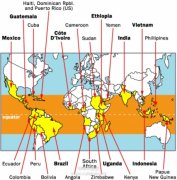
There are more than 60 coffee producing countries in the world, most of which are located in the tropics and subtropics between the Tropic of Cancer (latitude 2326). This coffee growing area is called coffee belt (Coffee Belt) or coffee area (Coffee Zone). The annual average temperature of the coffee belt is above 20 ℃, because the coffee tree is a tropical plant and cannot grow normally if the temperature is below 20 ℃. Coffee species

Analysis on the trend of African Coffee Market _ what are the varieties of African coffee beans _ which brands of African coffee are good
Professional coffee knowledge exchange more coffee bean information Please pay attention to Coffee Workshop (Wechat official account cafe_style) Coffee consumption in Africa has increased greatly. Countries such as Kenya and Uganda have established their own coffee cultures and become new territories of coffee, but they are also facing the new challenge of self-sufficiency. On the African continent, coffee beans have been used as a cash crop for years, but they are mostly for export and domestic demand.

Cultivation conditions of Coffee
Coffee is mainly grown in tropical and subtropical areas, which is called coffee belt (Coffee Belt). In general, in Europe and the United States, coffee produced at high altitude is more expensive and of high quality than those at lower altitude. There is a noun called coffee belt. Coffee is produced in more than 60 countries around the world, most of which are sandwiched in the Tropic of Cancer (23 degrees south and 27 minutes north).

Classification characteristics of Blue Mountain Coffee the special features of picking and selling blue mountain coffee
There are three grades of coffee in the Blue Mountain area of Jamaica: blue Mountain Coffee (BlueMountainCoffee), Alpine Coffee (JamaicaHighMountasinSupremeCoffeeBeans) and Jamaican Coffee (JamaicaPrimeCoffeeBeans). Among them, Blue Mountain Coffee and Alpine Coffee are each divided into two grades. In terms of quality, the order from top to bottom is: Lanshan No.1

Low yield coffee cultivation conditions Cultivation process and method Introduction
West Africa is the origin of Liberian coffee. It has strong adaptability to various environments such as high temperature or low temperature, humidity or dryness. It is not resistant to leaf rust and its flavor is worse than Arabica. Therefore, it is only traded domestically in some West African countries (Libya, Cote d'Ivoire, etc.) or planted for research. Coffee circulating in the world market

The geographical conditions of coffee production in Honduras, Santa Barara
For coffee production, the geographical conditions of Honduras are no less than those of its neighboring coffee-producing countries such as Guatemala and Nicaragua. There are 280000 hectares of coffee plantations in Honduras, mainly small coffee plantations, most of which are less than 3.5ha. These coffee plantations account for 60% of the total coffee production in Honduras. In the coffee garden, because the planting land belongs to

Columbia Sapphire Manor wush Honey processing hand Coffee how to make the Best drink
Professional coffee knowledge exchange more coffee bean information Please follow the coffee workshop (Wechat official account cafe_style) I heard that there is a Colombian coffee sun bean, the bean seed name is very lovely, called wush wush from the introduction to coffee, sun and washing are the most common treatment, almost every coffee-producing country of manors or small farmers have used. Only Colombia is very

An introduction to the founding history of IOC International Coffee Organization
125 million people in the world live on coffee, and most of the coffee is produced by small coffee farmers, who work so hard that the world can consume 600 billion cups of coffee a year. Large consumption makes coffee one of the most popular commodities in the world. More than 60 countries mainly produce and trade coffee. These countries rely heavily on coffee exports. According to statistics, there are many countries.

Talk about Certification | ICO-- International Coffee Organization formulates the International Coffee Convention
125 million people around the world depend on coffee, and most of the coffee is produced by small coffee farmers, who farm so hard that the world consumes 600 billion cups of coffee a year. Large consumption makes coffee one of the widely traded commodities in the world. More than 60 countries mainly produce and trade coffee. These countries rely heavily on coffee exports. According to statistics, there are many countries.

Ethiopia, the world's top 10 coffee bean producer, ranks first.
(photo, translation: Huang Wei) some people are addicted to coffee, while others scoff at coffee. Let's not debate whether coffee tastes good or not, but it is an indisputable fact that coffee is the largest drink in the world. In recent years, the output of raw coffee beans has been maintained at about 13560-kg bags, and there is a growing trend, mainly in emerging markets such as Brazil, Vietnam, India and China.

Colombia's coffee exports will be affected by the epidemic in 2020! Colombia is optimistic about the domestic coffee market
Because of the impact of the epidemic, the travel of people all over the world has been restricted, and countries have implemented traffic control regulations one after another, which has affected the exports of many coffee-producing countries to varying degrees, and disrupted many coffee supply chains around the world. the production, transportation and retail of coffee are greatly affected. Colombia, the fourth largest economy in Latin America, has at least 540000 countries.

Colombia coffee varieties castillo coffee beans where castillo coffee is good to drink
Due to the importance of coffee crops to Colombia's economy, Colombia invests far more in scientific coffee research than many coffee-producing countries. Colombia's National Coffee Survey Center (Cenicafe), run by the National Coffee Growers Federation (FNC), is the world's largest coffee producer.

Blue Mountain Coffee Bean Production Area Manor Variety Planting Market Price Profile
Blue Mountain Coffee lovers say: It is a coffee beauty that combines all the advantages of good coffee. Jim, general manager of Pitt Co., which is known for coffee and tea in the United States, described Blue Mountain coffee as aromatic, smooth and mellow. It gave me the feeling that it was as precious as a gem. It is precisely because the taste of Blue Mountain Coffee is moderate and perfect, so Blue Mountain Coffee is generally black coffee.
The world's major coffee producing areas introduce the basic knowledge of fine coffee coffee beans represented by all continents
Coffee comes from coffee beans, which are harvested and processed from the fruit of trees. Coffee trees grow at the center of the equator, between latitudes of 25 degrees south and north, and are called the homes of tropical or subtropical countries called coffee belts. At present, there are about 60 coffee-producing countries. Coffee is produced in South America, Central America, the West Indies, Asia, Africa, Arabia, the South Pacific and

Introduction of Honduran coffee with rich and well-balanced taste
For coffee production, the geographical conditions of Honduras are no less than those of its neighboring coffee-producing countries such as Guatemala and Nicaragua. There are 280000 hectares of coffee plantations in Honduras, mainly small coffee plantations, most of which are less than 3.5ha. These coffee plantations account for 60% of the total coffee production in Honduras. In the coffee garden, because the planting land belongs to
Major coffee bean producing areas in the world
Coffee comes from coffee beans, which are harvested and processed from the fruit of trees. Coffee trees grow at the center of the equator, between latitudes of 25 degrees south and north, and are called coffee belts in tropical or subtropical countries. at present, coffee is produced in more than 60 countries. Coffee is produced in South America, Central America, the West Indies, Asia, Africa, Arabia, the South Pacific and
Colombian Coffee
Coffee was first introduced to Colombia in 1808 when it was brought by a priest from the French Antilles via Venezuela. Today, the country is the second largest producer after Brazil, with an annual output of 13 million bags of 60 kg each, while Brazil produces 22 million bags a year. The status of coffee in Colombia can be seen in the following examples-all entering the

Djimmah is medium in texture and rugged with earthy Ethiopian boutique coffee beans.
The coffee-producing region of Ethiopia is divided into east and west parts by the East African Rift Valley, with lakes, volcanoes, lowlands, plateaus and woodlands interlaced, each evolving. Ethiopia has the most diverse coffee ecosystem in the world (forest coffee, semi-forest coffee, pastoral coffee and plantation coffee), which also preserves its rich Arabica genes. The eastern half is mostly plateaus, coffee beans.

Refreshing Colombian coffee
Coffee was first introduced to Colombia in 1808 when it was brought by a priest from the French Antilles via Venezuela. Today, the country is the second largest producer after Brazil, with an annual output of 13 million bags of 60 kg each, while Brazil produces 22 million bags a year. The status of coffee in Colombia can be seen in the following examples-all entering the

How can Colombian coffee beans make the most delicious coffee?
The largest producer of quality coffee in the world! The traditional deep-roasted coffee has a strong and memorable flavor. In 1808, coffee was first introduced to Colombia, which was brought by a priest from the French Antilles via Venezuela. Today, the country is the second largest producer after Brazil, with an annual output of 13 million bags of 60 kg each.